
You've decided you want to get married in Spain. Perhaps you've started browsing beautiful fincas, coastal venues and boutique hotels. Maybe you've even found somewhere that looks perfect.
But before you put down a deposit, there are a few important decisions worth making.
One of the biggest mistakes couples make when planning a destination wedding is falling in love with a venue before working out whether it actually suits their wedding, their guests and their budget.
Having planned weddings across Spain, I've seen how getting the early decisions right can save couples time, money and a considerable amount of stress.
Here are seven things I'd encourage you to think about before committing to a venue.
1. Decide how many guests you really want
This sounds obvious, but guest numbers influence almost every other decision.
Are you imagining an intimate celebration with 20-30 guests, or a larger wedding with 80-100 people?
Think about who you genuinely want to share the occasion with. Remember, a destination wedding involves additional travel and accommodation costs for your guests, so not everyone you invite will necessarily be able to attend.
Your guest numbers will influence your venue choices, catering costs, accommodation requirements and overall budget.
My advice: Create an initial guest list before looking at venues. It doesn't need to be final, but you need a realistic starting point.
2. Establish your realistic wedding budget
Let's talk about money.
A wedding in Spain isn't automatically cheaper than getting married in the UK or Ireland. In fact, depending on your expectations, it can cost just as much, if not more.
Your budget needs to cover more than the venue and catering.
Consider:
Venue hire and any exclusivity fees.
Food and drinks.
Ceremony and celebrant.
Photography and videography.
Flowers and styling.
Entertainment and music.
Transport and accommodation.
Wedding planning and coordination.
Any additional supplier or venue charges.
Also, ask what is included in your venue hire. Some venues offer tables, chairs, lighting and catering facilities, while others charge separately.
My advice: Establish a realistic overall budget before viewing venues. It will help you make informed decisions and avoid falling in love with somewhere that simply isn't financially viable.
3. Choose the right location in Spain
Spain is a big country, and each region offers something different.
Are you drawn to the Costa Blanca, Costa del Sol, Mallorca, Catalonia or somewhere further inland?
Think about accessibility for your guests.
Which airports serve the area?
Are there direct flights from the UK and Ireland?
How far is the venue from the airport?
Is there suitable accommodation nearby?
Will guests need to hire cars or can they use local transport?
If you're still deciding which part of Spain to choose, the official Spain tourism website has useful information about international airports and transport connections across the country.
A beautiful venue that is difficult or expensive for guests to reach may not be the best choice.
My advice: Choose your preferred region before starting your venue search. Consider the experience for your guests as well as the setting you want for your wedding.
4. Understand what type of venue suits your wedding
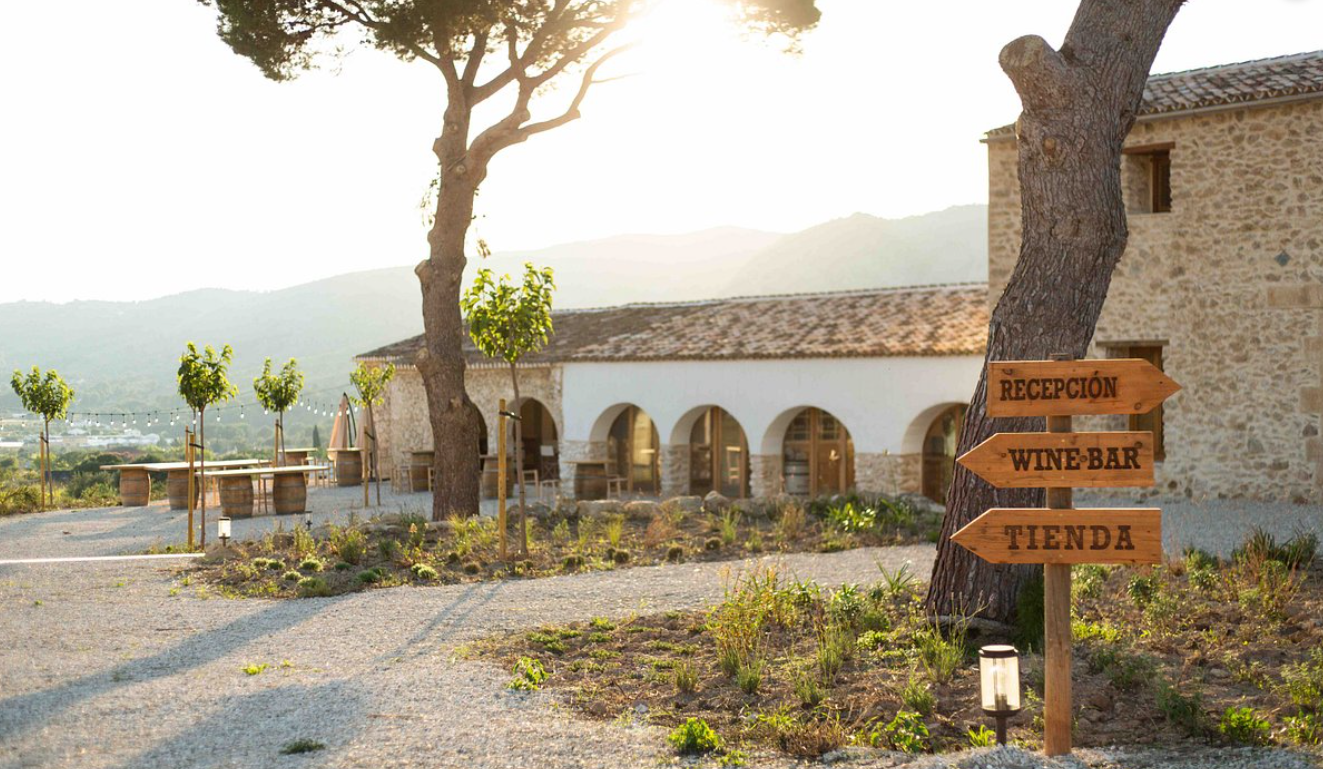
Montesanco Bodega, Teulada, Alicante
Spain has an incredible variety of wedding venues, from traditional fincas and country estates to beachfront hotels, private villas and contemporary event spaces.
But don't choose a venue simply because it looks wonderful in photographs.
Consider how you want your wedding day to unfold.
Do you want:
An outdoor ceremony followed by drinks and dinner under the stars?
A traditional Spanish finca with rustic character?
A hotel where guests can stay together?
A private villa offering a more intimate celebration?
Think about practicalities too. Does the venue have a suitable indoor alternative if the weather changes? Is there enough shade during the summer? Are there restrictions on music, finishing times or external suppliers?
My advice: Make a list of your non-negotiables before arranging viewings. It will make comparing venues much easier. If you'd like professional help finding a venue that matches your vision and budget, take a look at my Venue Finding Service
5. Think about the time of year and the Spanish climate
Spain enjoys plenty of sunshine, but that doesn't mean every month is suitable for every type of wedding.
July and August can be extremely hot, particularly inland. An outdoor ceremony at 3 pm may sound lovely when you're planning from the UK or Ireland, but it could be uncomfortable for your guests.
Spring and autumn are popular alternatives, although temperatures and weather conditions vary depending on the region.
Consider:
The average temperatures for your chosen month.
Whether your venue offers shaded areas.
Air conditioning for indoor spaces.
Evening temperatures.
The possibility of rain or strong winds.
My advice: Choose your wedding date with your guests' comfort in mind, not just the photographs.
6. Understand the ceremony options
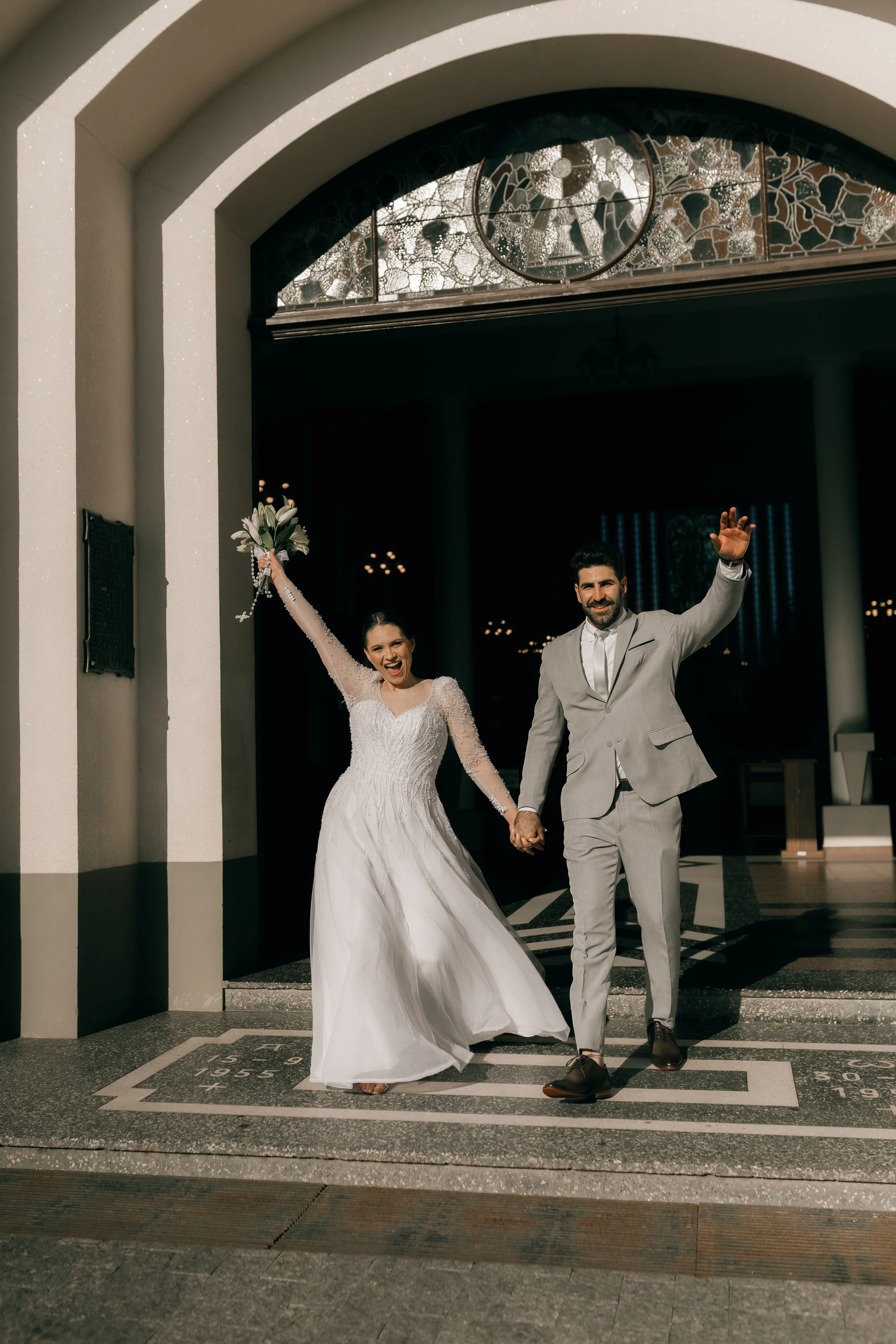
‘Just Married’
This is particularly important if you want a legally recognised marriage in Spain.
There is a difference between having your legal marriage in the UK or Ireland and celebrating with a symbolic ceremony in Spain, and completing the legal marriage in Spain itself.
Your options will depend on your circumstances, nationality and the type of ceremony you want.
You may prefer a celebrant-led ceremony, giving you the freedom to create something personal and meaningful, without the restrictions of a traditional civil ceremony.
Alternatively, you may want a Catholic church wedding or another religious ceremony. If you're considering a church wedding in Spain, read my Guide to Getting Married in a Catholic Church in Spain for more information.
Make sure you understand the requirements before choosing your venue, particularly if your ceremony needs to take place in a specific location.
My advice: Decide what type of ceremony you want early. It can influence your venue search, paperwork and planning timescale.
7. Decide how much help you need with the planning
Planning a wedding in another country involves more than finding a venue and booking a few suppliers.
There are contracts to review, suppliers to communicate with, payments to organise, timelines to create and decisions to make along the way.
You might be perfectly happy managing some of this yourself, but consider who will coordinate everything on the wedding day.
Who will check that suppliers arrive on time? Who will oversee the setup? Who will deal with unexpected problems while you are getting ready?
You don't want to spend your wedding day answering questions and organising suppliers.
You have enough to think about!
My advice: Be realistic about the time and responsibility involved. Whether you need full planning, partial planning or wedding day coordination, getting the right support can make a considerable difference.
So, what's the next step?
Planning a destination wedding in Spain should be exciting, but making decisions in the wrong order can create unnecessary complications and costs.
My biggest piece of advice is this: don't rush into booking a venue simply because you've fallen in love with it.
Start with your guest numbers, budget, preferred location and the type of celebration you want. Once those decisions are clear, you can start looking for venues that genuinely fit your plans.
And remember, you don't have to work everything out on your own.
As a destination wedding planner based on the Costa Blanca, I help couples from the UK and Ireland make informed decisions, find the right venues and bring their wedding plans together.
If you're considering getting married in Spain and would like some honest, practical advice before you start booking, let's talk about your wedding plans.
Let's make sure you get the important decisions right from the beginning.
